
Lifting the wrong weights—whether they’re too light or too heavy—can seriously limit your muscle-building results.
That alone should be a good enough reason to pay close attention to the loads you’re using in your workouts.
Weight selection isn’t the only factor, though. You also need the right number of reps and proper tempo to stimulate muscle growth effectively.
In this guide, I’ll explain what happens when you lift weights that are too light or too heavy—and why both can slow your progress.
You’ll also learn how to determine the optimal weight you should be lifting to maximize muscle growth.
So, let’s get started.
What will happen if you lift too heavy weights?
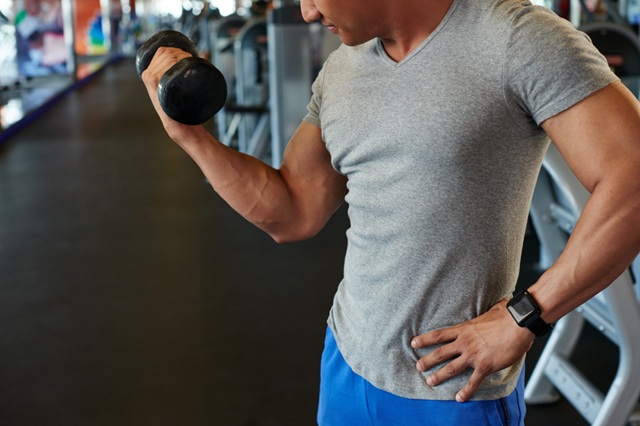
Any weight that you can’t lift at least 8 times is not optimal for building muscles and is more useful for gaining strength.
The goal is to choose the weight with which you can do 8 to 10 reps.
If you do a lot less or a lot more reps, your goal may not be to build muscle mass, but something else.
Then the technique of performing the exercise may not be good. Proper form is very important if you want maximum results.
Also, if you lift too heavy weights and do less than 6 reps you will increase your strength, but you need to know that this is not optimum for building muscles.
So, if you lift too heavy weights you can injure yourself because you are probably doing the exercises wrong.
What if you lift too light weights?
If you can lift more than 12 times, that’s not the optimal weight for building muscle.
Even if you do each set until failure, the weight isn’t enough to boost your muscles to grow and develop.
However, beginners who weightlift for the first time should exercise with light weights.
This is in order to avoid injuries and learn the correct technique of performing the exercises.
It is much easier to learn the correct form of the exercise with light weights.
But what if you always exercise with too light weights?
If you want your muscles to grow, you must encourage them to grow.
Without optimal weight, there is no minor damage, and renewal of muscle fibers.
In short, there is no muscle growth.
So, how much weight should you lift?
When you choose the weight to lift you should consider muscle failure.
You need to choose the weight that you can lift (and lower) 8 to 10 times so that you perform the last rep with great effort.
Typically, most muscle-building programs recommend that this weight is 70-85% of your 1RM (one repetition with maximum weight).
What is 1RM?
That’s the biggest weight you can lift only once while doing a certain exercise.
So, if you are doing a squat with 200 pounds and you manage to do only 1 rep that’s 1RM.
And 80% of 1RM, in this case, is 160 pounds.
How to Build Muscles Faster?
You can also use supplements to build muscle mass and strength.
If you want faster and better results, I suggest you read more about the best bodybuilding supplements.
Of course, I am talking only about natural supplements.
These supplements contain all the necessary ingredients, vitamins, and minerals your body needs after a hard workout.
The best supplement for me is Dbal.
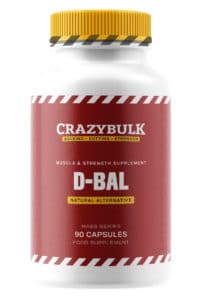
D-bal is the best natural alternative to the steroid Dianabol (best for muscle mass).
Thanks to the mix of powerful ingredients, vitamins, and minerals D-bal increases nitrogen retention in your muscles.
Nitrogen is essential for protein synthesis.
D-bal is safe and effective.
You can read more about D-bal here.
Bottom Line
We can do some math to help us choose the perfect weight you should lift:
(1RM) x (0.70-0.85) = Estimated weight you should lift
Determine your 1RM for each of the exercises.
So, this is the maximum weight that you can lift only once with the correct technique of performing the exercise.
We will assume that a bench press is done and that 1RM = 200 lbs.
Now the formula: 200 lbs. x 0.70 = 140 pounds
or
200 lbs. x 0.85 = 170 pounds.
So, the estimated amount of weight you should lift on the bench press is between 140 and 170 pounds.
Since the range is quite large, do additional tests to reach the optimal amount.
If you have calculated that 70% of 1RM bench press is 140 lbs., and you could do over 12 reps with that weight, then increase the weight.
If it’s the other way around and you could only do a few reps with 85% of 1RM, then reduce the weight.
Finally, now you know the ideal weight to lift for optimal muscle growth, but don’t forget about the right pace and technique of performing the exercise.

My name is Cliff and I am a personal coach, sports lover, fitness enthusiast and author of MusclesMagician. I have 15+ years of experience in fitness and bodybuilding and I want to share it with you. I am here to help you build muscles and lose fat faster.
No Comments Found