
Building muscle in your 50s is absolutely possible. You don’t need to spend hours in the gym or lift extremely heavy weights. What matters is choosing the right exercises, training consistently, and giving your muscles enough time to recover.
I recommend focusing on compound exercises that work several muscle groups at once. Here are some of the best workouts to gain muscle in your 50s.
Also, you’ll se how the best natural bulking supplement can help you gain muscle mass. You can read more about the best supplement I’m using here.
6 Workouts to Gain Muscle in 50s
1. Squats
Squats are one of the best exercises for building stronger legs. They also work your glutes and core.
Start with bodyweight squats or dumbbells if needed. Focus on controlled movement and proper depth instead of trying to lift as much weight as possible.
2. Deadlifts
Deadlifts work your hamstrings, glutes, lower back and several other muscle groups. They are great for building overall strength.
Use a weight you can handle without rounding your back. If traditional deadlifts feel uncomfortable, try dumbbell or trap-bar variations.
3. Bench Press
The bench press is a classic exercise for building your chest, shoulders and triceps.
You can use a barbell or dumbbells. Dumbbell bench presses are a good option if you prefer a more natural range of motion.
4. Pull-Ups
Pull-ups are excellent for building your back and biceps. If regular pull-ups are too difficult, use an assisted machine or try lat pulldowns.
Focus on controlled repetitions rather than swinging your body to complete the movement.
5. Bent-Over Rows
Rows are another great exercise for developing a stronger, thicker back. They also work your biceps and rear shoulders.
If your lower back gets tired, try chest-supported rows or seated cable rows instead.
6. Overhead Press
The overhead press targets your shoulders and triceps while also engaging your core.
Start with light dumbbells and avoid forcing the movement if you feel discomfort in your shoulders. Seated dumbbell presses are another option.
Supplementation
If you think I’ll show you a steroid that will build your body overnight then you are wrong.
I suggest taking only natural supplements.
The best supplement to increase muscle mass (and keep that muscle) is definitely D-Bal.
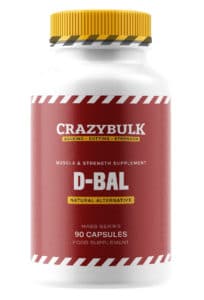
D-Bal is the best natural alternative to the steroid Dianabol (best for muscle mass).
Thanks to the mix of powerful ingredients D-Bal increases nitrogen retention in your muscles.
Nitrogen is essential for protein synthesis.
Here you can see the ingredients:
- L-Isoleucine – an amino acid that boosts your nitrogen level.
- Magnesium – The most important mineral for lean muscle, and the nervous system; it helps you recover faster.
- Vitamin D3 – Improves your immune system, and contributes to the maintenance of normal muscle function.
- Suma root – Plant extract, a powerful antioxidant.
- Ashwagandha – Plant extract, increases muscle mass and strength.
- MSM – Reduced muscle and joint pain after a workout.
- Hyaluronic Acid – Speeds up tendon to bone healing.
- Tribulus Terrestris – a plant extract, the strongest natural testosterone booster.
This is my favorite supplement and I am using it in my bulking phase.
You will maximize your gym efforts if you combine the best workouts to gain muscle with D-Bal.
You can read more about D-Bal and check the price here.
How Often Should You Train in Your 50s?
I recommend strength training 3–4 times per week, depending on your fitness level and recovery.
You don’t need to train every muscle group every day. Give each muscle group around 48 hours to recover before training it hard again.
A few simple guidelines:
- Aim for 2–3 sets of 8–12 repetitions for most exercises.
- Increase weights gradually as you get stronger.
- Warm up before lifting.
- Don’t ignore joint pain or push through injuries.
- Get enough protein and sleep to support muscle recovery.
Final Thoughts
You can build muscle in your 50s without following an extreme workout routine. Stick to basic exercises, use weights you can control, and stay consistent.
Remember, recovery is just as important as training. Give your body enough time to adapt, and you’ll keep getting stronger.
My name is Cliff and I am a personal coach, sports lover, fitness enthusiast and author of MusclesMagician. I have 15+ years of experience in fitness and bodybuilding and I want to share it with you. I am here to help you build muscles and lose fat faster.


No Comments Found